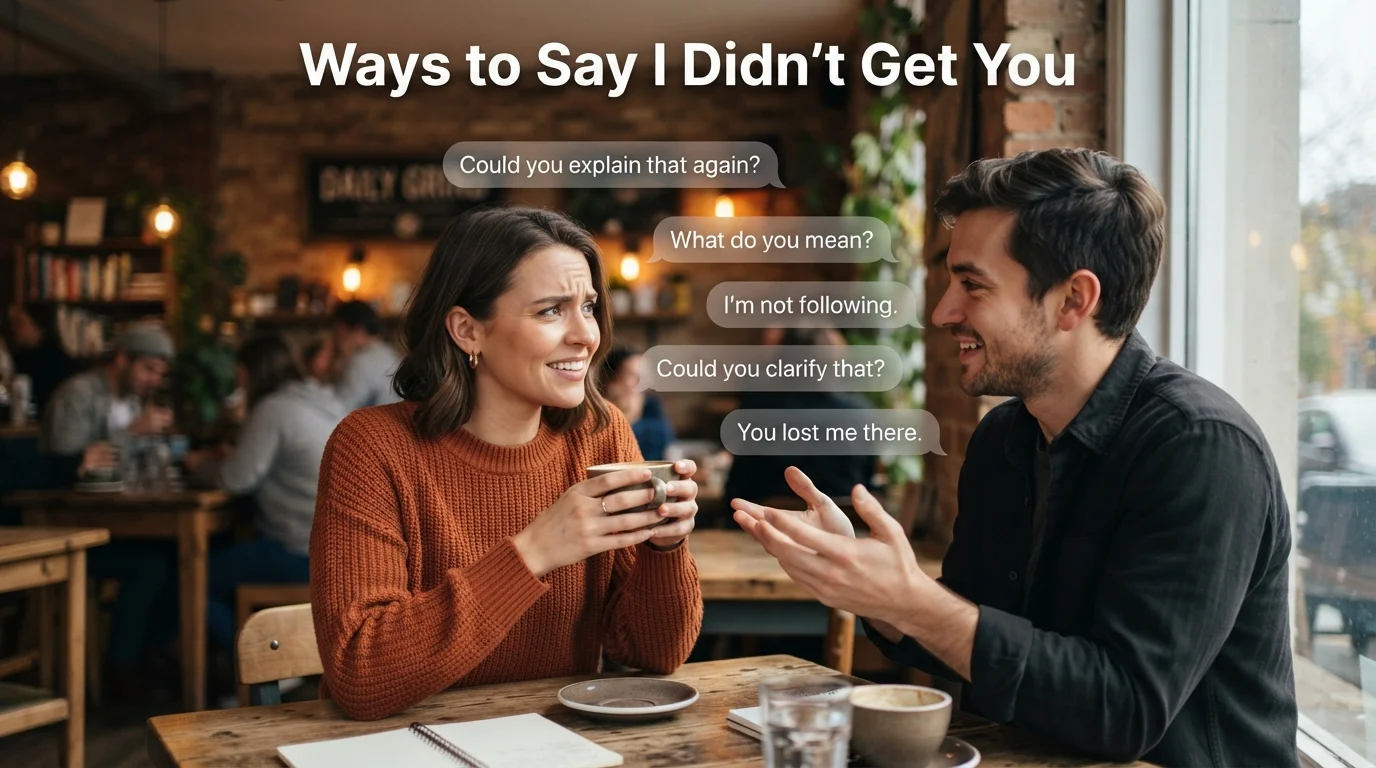
Sometimes you hear someone speak, but their words, meaning, or explanation do not quite make sense. Instead of simply saying “I didn’t get you,” you can choose a response that matches the situation, whether you are chatting with a friend, talking at work, texting someone, or asking for clarification.
Knowing different ways to say I didn’t get you can help you sound more natural and considerate. You can ask someone to repeat themselves, explain something differently, or clarify what they meant without making the conversation awkward. Here are practical alternatives for almost every situation.
1. Could You Explain That Again?
This is a polite way to ask someone to repeat or clarify their point.
Best for: Conversations where you genuinely need more explanation.
Alternative: Could you go over that again?
Examples:
“Could you explain that again? I’m not sure I understood.”
“Sorry, could you explain that again?”
2. I Didn’t Quite Understand
This sounds polite and respectful, especially when you want to avoid sounding blunt.
Best for: Professional or formal conversations.
Alternative: I’m not sure I understood.
Examples:
“I didn’t quite understand what you meant.”
“Sorry, I didn’t quite understand that part.”
3. What Do You Mean?
A simple question that directly asks the other person to clarify.
Best for: Casual conversations.
Alternative: What exactly do you mean?
Examples:
“What do you mean by that?”
“Wait, what do you mean?”
4. I’m Not Following You
This tells someone that you are having trouble following their explanation.
Best for: Longer explanations or complicated conversations.
Alternative: I’m having trouble following.
Examples:
“I’m not following you. Could you explain that another way?”
“Sorry, I’m not following what you’re saying.”
5. Could You Clarify That?
This is concise, professional, and useful when someone’s statement is unclear.
Best for: Work, school, and formal discussions.
Alternative: Could you be more specific?
Examples:
“Could you clarify that for me?”
“Could you clarify what you meant by that?”
6. Sorry, I Missed That
Use this when you did not hear or catch what someone said.
Best for: Phone calls, noisy places, or quick conversations.
Alternative: Sorry, I didn’t catch that.
Examples:
“Sorry, I missed that. Could you repeat it?”
“I missed that last part.”
7. I Didn’t Catch What You Said
This is a natural phrase when you did not hear someone clearly.
Best for: Everyday conversations.
Alternative: I didn’t catch that.
Examples:
“I didn’t catch what you said. Could you repeat it?”
“Sorry, I didn’t catch the last sentence.”
8. Could You Say That Again?
A straightforward and friendly way to request repetition.
Best for: Friends, coworkers, classmates, and everyday situations.
Alternative: Can you repeat that?
Examples:
“Could you say that again?”
“Sorry, could you say that one more time?”
9. I’m Not Sure What You Mean
This communicates confusion without sounding confrontational.
Best for: Sensitive or unclear conversations.
Alternative: I’m not sure I understand your point.
Examples:
“I’m not sure what you mean. Can you explain?”
“I’m not sure what you mean by that.”
10. Can You Put That Another Way?
Sometimes you understand the words but not the idea behind them.
Best for: Complicated explanations.
Alternative: Could you explain it differently?
Examples:
“Can you put that another way?”
“I understand the words, but could you put the idea another way?”
11. I’m Confused
Being direct can sometimes be the clearest option.
Best for: Situations where you genuinely do not understand.
Alternative: I’m a little confused.
Examples:
“I’m confused. What are you trying to say?”
“Sorry, I’m a little confused about that.”
12. I Don’t Quite Follow
This is a softer alternative to saying you did not understand.
Best for: Polite everyday or professional conversations.
Alternative: I’m having trouble following.
Examples:
“I don’t quite follow. Could you explain?”
“Sorry, I don’t quite follow your point.”
13. I’m Not Sure I Follow Your Point
This phrase works well when you understand the individual words but not the overall argument.
Best for: Discussions, debates, and workplace conversations.
Alternative: I’m not sure I understand your point.
Examples:
“I’m not sure I follow your point.”
“Could you explain your point a little more?”
14. Wait, What Are You Saying?
This sounds natural and conversational.
Best for: Informal conversations with people you know.
Alternative: Wait, what do you mean?
Examples:
“Wait, what are you saying?”
“Hold on, what are you saying?”
15. Could You Give Me an Example?
If someone’s explanation is too abstract, asking for an example can make everything clearer.
Best for: Instructions, lessons, and explanations.
Alternative: Can you give me an example?
Examples:
“I’m not quite following. Could you give me an example?”
“Could you give me an example of what you mean?”
16. Can You Break That Down for Me?
This is useful when someone gives you too much information at once.
Best for: Complex subjects or detailed explanations.
Alternative: Could you simplify that?
Examples:
“Can you break that down for me?”
“I’m a little lost. Could you break it down?”
17. I’m a Little Lost
A friendly expression that shows confusion without blaming the other person.
Best for: Casual conversations.
Alternative: I’m a bit confused.
Examples:
“I’m a little lost. What happens next?”
“Sorry, I’m a little lost here.”
18. I’m Not Getting What You Mean
This is a natural conversational alternative to “I didn’t get you.”
Best for: Informal conversations and texting.
Alternative: I’m not getting your point.
Examples:
“I’m not getting what you mean.”
“Sorry, I’m not getting what you’re trying to say.”
19. Could You Be More Specific?
Use this when someone’s statement is too vague.
Best for: Work, planning, or serious discussions.
Alternative: What specifically do you mean?
Examples:
“Could you be more specific about what you need?”
“I understand generally, but could you be more specific?”
20. I’m Not Sure I Understand
This is one of the safest polite alternatives.
Best for: Professional and respectful conversations.
Alternative: I’m not sure I understand what you mean.
Examples:
“I’m not sure I understand. Could you explain?”
“I’m not sure I understand that part.”
21. Sorry, I’m a Bit Confused
Adding “sorry” makes the request sound softer and more courteous.
Best for: Polite conversations.
Alternative: Sorry, I’m having trouble understanding.
Examples:
“Sorry, I’m a bit confused. Could you explain?”
“Sorry, I’m a little confused about what you mean.”
22. Are You Saying That…?
This is useful when you have an idea of what the person means but want to confirm it.
Best for: Avoiding misunderstandings.
Alternative: Do you mean that…?
Examples:
“Are you saying that we should leave earlier?”
“Are you saying you don’t want to go?”
23. Do You Mean…?
This is a short and effective clarification phrase.
Best for: Texting and everyday conversations.
Alternative: Are you saying…?
Examples:
“Do you mean you’re upset with me?”
“Do you mean we should change the plan?”
24. I’m Not Sure I Understand What You’re Getting At
This asks someone to explain the underlying point they are trying to make.
Best for: Deeper or indirect conversations.
Alternative: What are you getting at?
Examples:
“I’m not sure I understand what you’re getting at.”
“Could you explain what you’re getting at?”
25. Can You Rephrase That?
This is a concise way to ask someone to express an idea differently.
Best for: Professional, academic, or clear communication.
Alternative: Could you word that differently?
Examples:
“Can you rephrase that? I’m not following.”
“Could you rephrase that in simpler terms?”
26. My Brain Is Not Processing That
This adds humor while admitting that you are confused.
Best for: Friends and relaxed conversations.
Alternative: My brain needs a minute to process that.
Examples:
“My brain is not processing that right now.”
“Give me a second—my brain needs to process that.”
27. You Lost Me There
A casual and slightly humorous way to say you stopped understanding.
Best for: Friends, coworkers you know well, and casual discussions.
Alternative: You lost me for a second.
Examples:
“You lost me there. What happened?”
“Okay, you lost me at the last part.”
28. Wait, I’m Not Following
This sounds natural when someone is speaking quickly or explaining something complicated.
Best for: Fast-paced conversations.
Alternative: Hold on, I’m not following.
Examples:
“Wait, I’m not following. Can you go back?”
“Hold on, I’m not following what you mean.”
29. I’m Missing Something
This phrase is useful when you think the other person has explained something but you still cannot connect the dots.
Best for: Discussions where you want to remain open-minded.
Alternative: I feel like I’m missing something.
Examples:
“I’m missing something. How did we get to that conclusion?”
“I feel like I’m missing something here.”
30. I’m Not Sure I Got You
This is one of the closest natural alternatives to “I didn’t get you.”
Best for: Casual, friendly conversations where you want clarification.
Alternative: I’m not sure I understood you.
Examples:
“I’m not sure I got you. Can you explain?”
“Sorry, I’m not sure I got you there.”
FAQs
What is a polite way to say “I didn’t get you”?
You can say, “I didn’t quite understand,” “Could you clarify that?” or “I’m not sure I follow.” These sound more considerate than simply saying you did not understand.
What can I say instead of “I didn’t get what you mean”?
Try “I’m not sure what you mean,” “Could you explain that again?” or “Can you put that another way?”
How do you say “I didn’t get you” professionally?
In professional situations, phrases such as “I’m not sure I understand,” “Could you clarify that?” and “Could you elaborate on that?” work well.
What is a casual way to say you don’t understand?
You can say, “You lost me,” “I’m a little lost,” “Wait, what do you mean?” or “I’m not getting you.”
How do I ask someone to explain without sounding rude?
Use a soft phrase such as “Sorry, could you explain that again?” or “I’m not sure I understood. Could you clarify?” Adding “sorry,” “please,” or “could you” can make your request sound more polite.
Conclusion
There are many natural ways to say I didn’t get you, and the best choice depends on the conversation. For professional situations, phrases like “I’m not sure I understand” or “Could you clarify that?” are respectful and clear. In casual conversations, “You lost me,” “What do you mean?” or “I’m a little lost” can sound more relaxed.
The key is to focus on clarification rather than making the other person feel blamed. Whether you need someone to repeat their words, explain an idea, or give you an example, a simple and respectful question can keep the conversation moving smoothly.

I’m Casey Thomas, an author at Replieds, where I share helpful, thoughtful, and engaging replies to make everyday conversations easier, clearer, and more natural for everyone.