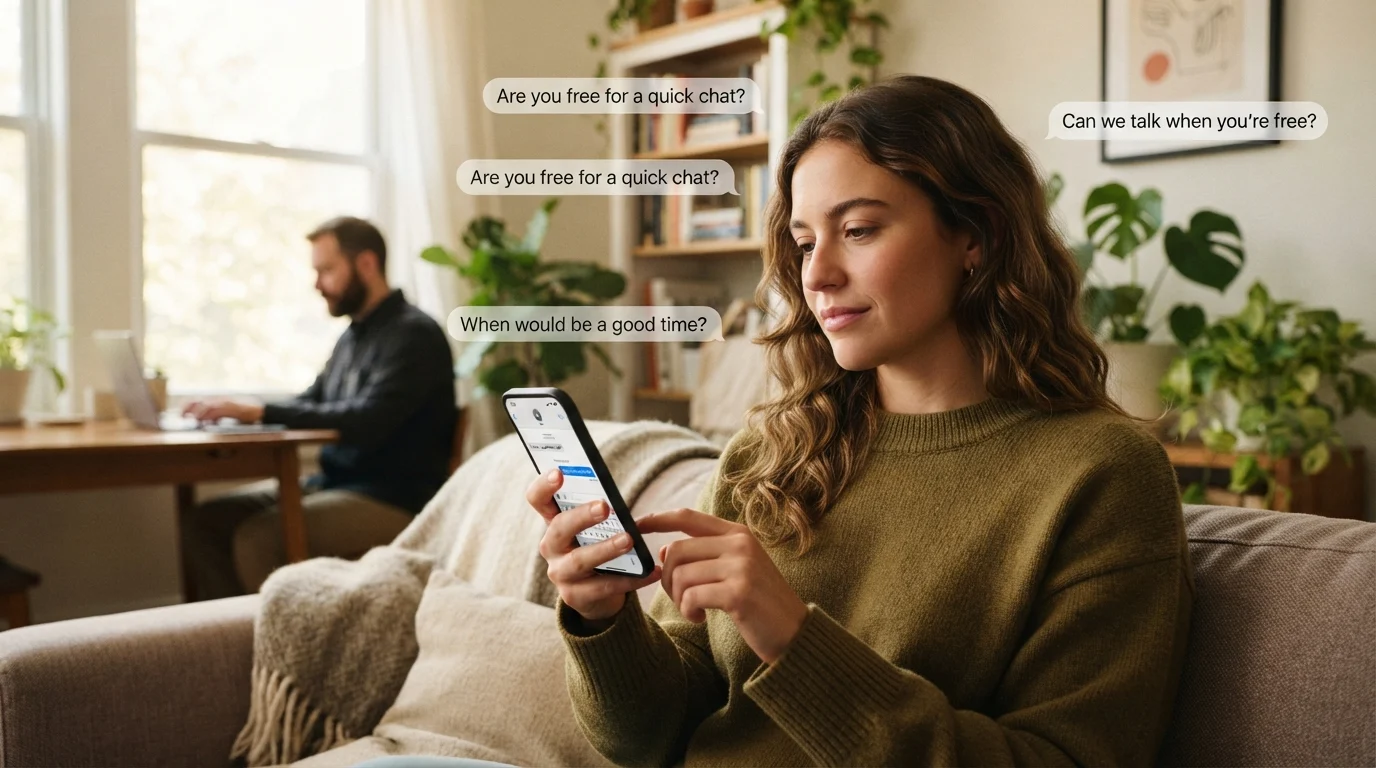
Sometimes you want to talk to someone, but you do not know whether they are busy, stressed, working, or simply not in the mood for a conversation. Asking if it is a good time to talk is a small gesture, but it shows consideration and respect for the other person’s time and feelings.
There are many ways to ask “Is it a good time to talk?” depending on who you are contacting and why you need to speak with them. You might want a casual text for a friend, a professional message for a coworker, or a gentle way to start a serious conversation. The right wording can make your message feel thoughtful rather than demanding.
1. Is Now a Good Time to Talk?
This is one of the simplest and most natural ways to check someone’s availability. It works well when you want to have a conversation without putting pressure on them.
Best for: Friends, family, coworkers, or someone you know well.
Alternative: “Do you have a few minutes to talk?”
Examples:
- “Hey, is now a good time to talk?”
- “Hi, is now a good time for a quick conversation?”
2. Do You Have a Minute to Talk?
If you only need a short conversation, this wording makes your request feel manageable. It is friendly and direct without sounding demanding.
Best for: Quick conversations and everyday situations.
Alternative: “Do you have a minute?”
Examples:
- “Hey, do you have a minute to talk?”
- “When you have a minute, could we chat?”
3. Are You Free to Talk Right Now?
This question clearly asks about the person’s current availability. It is especially useful for texting because the other person can easily answer yes or no.
Best for: Friends, family, and casual conversations.
Alternative: “Are you available for a quick chat?”
Examples:
- “Are you free to talk right now?”
- “Hey, are you free for a quick call?”
4. Can I Call You?
Sometimes you do not need to explain the entire reason for calling. Simply asking permission before making the call can be polite and considerate.
Best for: Texting someone before calling.
Alternative: “Would it be okay if I called?”
Examples:
- “Can I call you when you’re free?”
- “Are you okay with a quick call?”
5. Do You Have Time for a Quick Chat?
Adding “quick” can reassure someone that you are not necessarily asking for a long conversation. However, use it only when the conversation really can be brief.
Best for: Coworkers, friends, and casual professional conversations.
Alternative: “Could we have a quick chat?”
Examples:
- “Do you have time for a quick chat?”
- “When you’re free, can we have a quick conversation?”
6. Is This a Good Time for You?
This version sounds especially considerate because it focuses on the other person’s convenience.
Best for: Sensitive conversations or someone whose schedule you do not know.
Alternative: “Is this a convenient time to talk?”
Examples:
- “Hi, is this a good time for you?”
- “Before I call, is this a good time to talk?”
7. When Would Be a Good Time to Talk?
If you suspect the person is busy, asking for a better time can be more useful than simply asking whether they are available now.
Best for: Busy people and professional contacts.
Alternative: “When would be convenient for you?”
Examples:
- “When would be a good time for us to talk?”
- “Let me know when you have some time to chat.”
8. Are You Available for a Conversation?
This sounds slightly more formal than “Are you free to talk?” It works well when you want to maintain a respectful tone.
Best for: Professional or semi-formal communication.
Alternative: “Would you be available to speak?”
Examples:
- “Are you available for a conversation this afternoon?”
- “Would you be available to speak for a few minutes?”
9. Could We Talk When You’re Free?
This wording gives the other person plenty of flexibility. You are asking to talk without expecting an immediate response.
Best for: When there is no urgent deadline.
Alternative: “Could we chat when you have some time?”
Examples:
- “Could we talk when you’re free?”
- “Whenever you have a moment, I’d like to talk.”
10. Is It Okay If We Talk?
This is gentle and straightforward. It can be useful when you want to make sure the other person feels comfortable before starting a conversation.
Best for: Personal or emotional conversations.
Alternative: “Would it be okay to talk for a bit?”
Examples:
- “Is it okay if we talk for a few minutes?”
- “Would it be okay if we talked about something?”
11. Can We Talk for a Few Minutes?
This phrase communicates that you are looking for a short conversation. It is direct but still respectful.
Best for: Friends, family, coworkers, and partners.
Alternative: “Could we talk for a few minutes?”
Examples:
- “Can we talk for a few minutes when you’re free?”
- “Could we have a few minutes to talk?”
12. Do You Have Time to Talk Today?
If talking immediately is not necessary, asking about the whole day gives the other person more freedom.
Best for: Scheduling conversations.
Alternative: “Would you have some time to talk today?”
Examples:
- “Do you have time to talk sometime today?”
- “Would you be free for a chat later today?”
13. Can We Talk Later?
Sometimes the person may be busy right now, so a simple request to talk later is enough.
Best for: Casual texting.
Alternative: “Can we catch up later?”
Examples:
- “Are you busy right now? Can we talk later?”
- “No rush—can we chat later when you’re free?”
14. Are You Busy, or Can We Talk?
This wording acknowledges that the person may already have something going on. It is casual and natural in everyday conversations.
Best for: Close friends and family.
Alternative: “Are you free, or should I call later?”
Examples:
- “Are you busy, or can we talk for a minute?”
- “Are you in the middle of something, or can I call?”
15. Can I Talk to You About Something?
When you need to discuss a specific matter but do not want to immediately reveal everything, this phrase works well.
Best for: Personal, important, or slightly serious conversations.
Alternative: “Could I talk to you about something?”
Examples:
- “Hey, can I talk to you about something when you’re free?”
- “Could I talk to you about something that’s been on my mind?”
16. Is This a Good Time to Call?
If you are planning a phone conversation, this is clearer than simply asking whether the person is available.
Best for: Phone calls and professional contacts.
Alternative: “Would now be a good time for a call?”
Examples:
- “Is this a good time to call?”
- “Would now be a convenient time for me to call you?”
17. Would Now Be a Convenient Time to Talk?
“Convenient” gives this question a more polished and professional tone. It shows that you respect the other person’s schedule.
Best for: Workplace communication and formal conversations.
Alternative: “Would this be a convenient time to speak?”
Examples:
- “Would now be a convenient time to talk?”
- “Is this a convenient time for a brief discussion?”
18. Are You in the Right Headspace to Talk?
Sometimes availability is not the only concern. Someone may technically be free but emotionally overwhelmed or tired.
Best for: Emotional or sensitive conversations.
Alternative: “Do you feel up to talking right now?”
Examples:
- “I wanted to talk about something important. Are you in the right headspace?”
- “No pressure—are you in the mood to talk?”
19. Do You Feel Like Talking?
This is softer than asking whether someone is available. It gives them permission to say they are not ready.
Best for: Close friends, partners, or emotional situations.
Alternative: “Are you up for a conversation?”
Examples:
- “Do you feel like talking for a little while?”
- “If you’re up for it, I’d love to talk.”
20. Is Now an Okay Time to Talk About This?
When the subject itself might be sensitive, mentioning “this” acknowledges that the topic may require some emotional space.
Best for: Difficult conversations.
Alternative: “Are you comfortable talking about this right now?”
Examples:
- “Is now an okay time to talk about what happened?”
- “Would now be okay to discuss this?”
21. Can We Find a Time to Talk?
If both of you have busy schedules, this approach focuses on finding a mutually convenient time.
Best for: Busy friends, colleagues, clients, or family members.
Alternative: “When can we schedule a conversation?”
Examples:
- “Can we find a time to talk this week?”
- “I’d like to discuss this—when would work for you?”
22. Let Me Know When You’re Free to Talk
This is useful when you do not want to interrupt someone. It also puts the timing in their hands.
Best for: Text messages and professional communication.
Alternative: “Just let me know when you’re available.”
Examples:
- “No rush. Let me know when you’re free to talk.”
- “Whenever you have time, send me a message and we’ll chat.”
23. Would You Have a Few Minutes to Talk?
This sounds polite and professional while still feeling approachable.
Best for: Workplace conversations, managers, teachers, or acquaintances.
Alternative: “Would you have a few minutes for a quick conversation?”
Examples:
- “Would you have a few minutes to talk this afternoon?”
- “Would you have a few minutes for a brief discussion?”
24. Could I Borrow a Few Minutes of Your Time?
This is a respectful way to ask for someone’s attention. It is more formal than most everyday alternatives.
Best for: Professional environments.
Alternative: “Could I have a few minutes of your time?”
Examples:
- “Could I borrow a few minutes of your time when you’re available?”
- “Could I have a few minutes to discuss something with you?”
25. Are You Free for a Quick Call?
This is concise and natural, particularly in texting. It works when you want to move the conversation from messages to a call.
Best for: Friends, coworkers, and acquaintances.
Alternative: “Free for a quick call?”
Examples:
- “Hey, are you free for a quick call?”
- “Do you have time for a five-minute call?”
26. Is It a Good Time to Talk, or Should I Reach Out Later?
This is one of the most considerate options because it gives the person an easy alternative.
Best for: Busy people or potentially sensitive topics.
Alternative: “Should we talk now, or would later be better?”
Examples:
- “Is it a good time to talk, or should I reach out later?”
- “Are you available now, or would another time work better?”
27. Can We Talk When You Have a Moment?
This phrase feels relaxed and does not create unnecessary urgency.
Best for: Casual conversations and non-urgent messages.
Alternative: “When you get a chance, can we chat?”
Examples:
- “Can we talk when you have a moment?”
- “When you have a moment, I’d like to run something by you.”
28. I’d Like to Talk—When Is a Good Time for You?
Instead of demanding attention immediately, this clearly communicates your intention while allowing the other person to choose a suitable time.
Best for: Important personal or professional conversations.
Alternative: “I’d like to talk with you. When would work for you?”
Examples:
- “I’d like to talk about something important. When is a good time for you?”
- “I’d appreciate a chance to talk. Let me know what time works.”
29. No Rush—Let Me Know When You’re Ready to Talk
Sometimes the most supportive approach is to remove pressure completely. This works particularly well when someone may need time before having a conversation.
Best for: Emotional, difficult, or personal situations.
Alternative: “Take your time, and we’ll talk when you’re ready.”
Examples:
- “No rush. Let me know when you’re ready to talk.”
- “Take your time—I’m here whenever you feel ready.”
30. What’s a Good Time for Us to Talk?
This is a warm, collaborative way to arrange a conversation. It suggests that both people can decide what works rather than making the conversation feel one-sided.
Best for: Relationships, work discussions, and planned conversations.
Alternative: “When would work best for you?”
Examples:
- “What’s a good time for us to talk about this?”
- “When would be a good time for us to catch up?”
How to Choose the Right Way to Ask
The best way to ask if it is a good time to talk depends on your relationship, the topic, and how urgent the conversation is. A message to your best friend can be casual, while a message to your manager should usually be more professional.
For a simple conversation, try “Are you free to talk?” For something sensitive, “Are you in the right headspace to talk?” is more considerate. In a workplace, “Would you have a few minutes to talk?” sounds respectful and appropriate.
What to Avoid When Asking to Talk
Avoid making your message sound unnecessarily urgent when the situation is not urgent. Messages such as “We need to talk ASAP” can make someone anxious before they even know what the conversation is about.
Instead, be clear about timing and give the person some flexibility. If the subject is serious, you can briefly explain why you want to talk without creating unnecessary alarm.
How to Ask Over Text
Texting makes it easy to check someone’s availability without interrupting them. Keep your message short, friendly, and clear.
You can say, “Hey, are you free for a quick chat?” or “Let me know when you’re free to talk.” If the topic is important, consider adding a little context so the person knows what to expect.
How to Ask in a Professional Setting
Professional conversations usually benefit from polite, specific wording. Rather than simply saying “Can we talk?”, mention the approximate amount of time or suggest a time range.
For example, “Would you have 10 minutes to discuss the project?” gives the other person useful information and makes scheduling easier.
How to Ask About a Sensitive Topic
Sensitive conversations require extra care. Instead of assuming the person is ready, acknowledge that they may need time or privacy.
Phrases such as “Is now an okay time to talk about this?” or “Do you feel up to talking?” allow the other person to decide whether they are ready.
How to Ask Someone Who Is Usually Busy
When someone has a demanding schedule, avoid putting them on the spot. Ask when they are available rather than expecting an immediate conversation.
A message like “I know you’re busy. When would be a good time to talk?” shows that you recognize their schedule while still communicating that the conversation matters.
How to Make the Question Feel Less Intimidating
Your tone can make a huge difference. If you suddenly text “Can we talk?”, the other person may assume something is wrong.
When appropriate, make your request reassuring. “Hey, nothing urgent—I just wanted to chat. Let me know when you’re free” can make the conversation feel more relaxed.
FAQs
1. What is a polite way to ask if it is a good time to talk?
A simple option is, “Is now a good time to talk?” For a more professional tone, try, “Would now be a convenient time to speak?”
2. How do I ask someone to talk without pressuring them?
Give them an easy choice. For example, say, “Are you free to talk now, or would later be better?” This shows that you respect their schedule.
3. What should I text before calling someone?
You can say, “Are you free for a quick call?” or “Is this a good time to call?” These messages give the person a chance to respond before you call.
4. How do I ask if someone is emotionally ready to talk?
Use gentle language such as, “Are you in the right headspace to talk?” or “Do you feel up to talking right now?” This is especially appropriate for sensitive conversations.
5. Is “Can we talk?” too serious?
It can sometimes sound serious because it gives no context. If you want to make it less intimidating, try “Hey, do you have a few minutes to chat?” or briefly explain what you want to discuss.
Conclusion
Knowing different ways to ask is it a good time to talk can make everyday communication easier and more respectful. Whether you’re checking on a friend, contacting a coworker, calling a family member, or starting a difficult conversation, a thoughtful question gives the other person space to respond honestly.
The key is to match your wording to the situation. Keep it casual when the conversation is casual, professional when you’re at work, and especially gentle when emotions are involved. A simple “Are you free to talk?” can open the door, while “When would be a good time for you?” gives someone more control over the conversation.

I’m Brianna Grace, an author at Replieds. I love creating thoughtful, practical replies that help people communicate naturally, confidently, and meaningfully in everyday conversations.