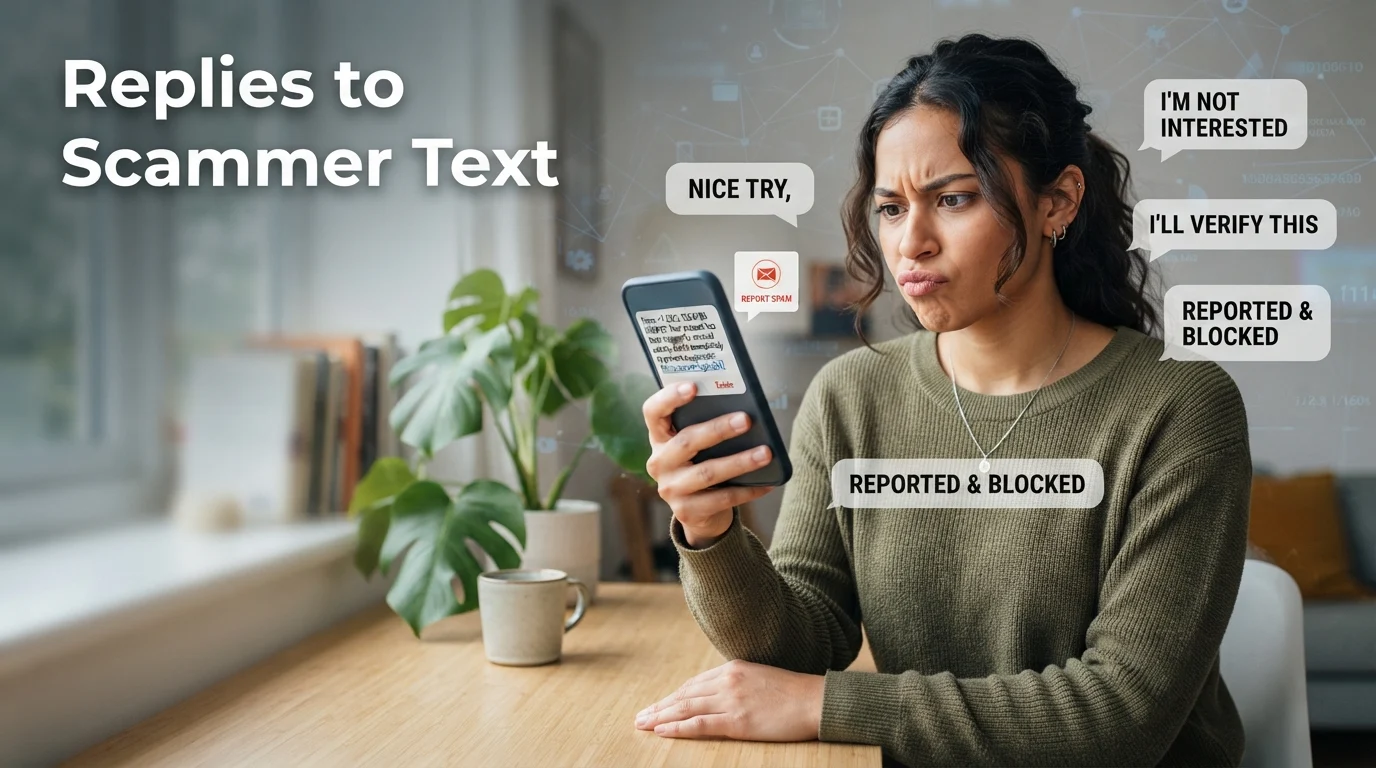
Receiving a suspicious message can be frustrating, especially when someone is trying to trick you into sharing personal information, sending money, clicking a link, or revealing an account code. Knowing the right replies to scammer text can help you stay confident without getting pulled into a risky conversation.
If the message is pretending to be from a bank, delivery company, employer, friend, or random stranger, you do not need to give the sender much information. In fact, sometimes the smartest response is no response at all. Here are practical responses to scam texts ranging from firm and professional to clever and funny, while keeping your privacy and security first.
1. “I’m Not Interested”
A short and direct response makes your position clear without giving the sender unnecessary information.
Best for: Unwanted offers, fake promotions, and suspicious opportunities.
Alternative: “No thanks. I’m not interested.”
Examples:
“I’m not interested. Please don’t contact me again.”
“No thanks. I’ll pass on this.”
2. “Please Stop Messaging Me”
When suspicious messages keep coming, a clear boundary can be useful.
Best for: Persistent scam texts and repeated contact.
Alternative: “Please do not contact this number again.”
Examples:
“Please stop messaging me.”
“I don’t want any further messages from you.”
3. “You Have the Wrong Number”
Some scams begin with a supposedly accidental text or unfamiliar introduction.
Best for: Wrong-number scams.
Alternative: “I think you have the wrong person.”
Examples:
“You have the wrong number. Take care.”
“Sorry, you’ve reached the wrong person.”
4. “Nice Try”
This short comeback works when the scam is so obvious that there is little doubt about its intent.
Best for: Clearly fake offers and suspicious messages.
Alternative: “Good attempt, but I’m not falling for it.”
Examples:
“Nice try. I’m not interested.”
“Good attempt, but this isn’t going to work.”
5. “I’ll Verify This Independently”
Scammers often pretend to represent legitimate companies. Let them know you will verify the claim yourself.
Best for: Fake bank, delivery, government, or customer-service messages.
Alternative: “I’ll contact the company directly to confirm.”
Examples:
“I’ll verify this through the official website.”
“I’ll contact the company myself instead of using this message.”
6. “I Don’t Click Unknown Links”
Suspicious links can lead to phishing pages or malicious websites.
Best for: Texts containing unexpected links.
Alternative: “I never open unsolicited links.”
Examples:
“I don’t click links from unknown senders.”
“If I need to access my account, I’ll use the official app.”
7. “I Don’t Share Personal Information by Text”
This response establishes a strong privacy boundary.
Best for: Messages requesting your address, identification details, passwords, or account information.
Alternative: “I don’t provide sensitive information through unsolicited messages.”
Examples:
“I don’t share personal details by text.”
“I won’t provide account information through an unknown number.”
8. “I’ll Contact the Official Company”
If someone claims to represent a business, don’t rely on the contact details supplied in the suspicious message.
Best for: Impersonation scams.
Alternative: “I’ll use the company’s verified contact information.”
Examples:
“I’ll contact the company directly to check this.”
“I’ll use the official customer-service number instead.”
9. “This Doesn’t Look Legitimate”
You can point out your concern without revealing anything about yourself.
Best for: Obviously suspicious messages.
Alternative: “This message appears suspicious.”
Examples:
“This doesn’t look legitimate, so I won’t continue.”
“I’m not comfortable responding to this request.”
10. “I Don’t Respond to Unknown Numbers”
Keep your response simple when you don’t recognize the sender.
Best for: Random numbers and unsolicited messages.
Alternative: “I only communicate with verified contacts.”
Examples:
“I don’t respond to unknown numbers.”
“I don’t continue conversations with unidentified senders.”
11. “I’ll Pass”
Sometimes you don’t need to explain why you are declining.
Best for: Suspicious job offers, investments, prizes, or promotions.
Alternative: “No thanks.”
Examples:
“I’ll pass on this opportunity.”
“Thanks, but I’m going to decline.”
12. “I Don’t Discuss Money Through Text”
Financial requests deserve extra caution, particularly when they arrive unexpectedly.
Best for: Payment requests, investment scams, and fake emergencies.
Alternative: “I never send money based on unsolicited messages.”
Examples:
“I don’t handle financial requests through random texts.”
“I won’t make a payment based on an unexpected message.”
13. “I’ll Check With the Real Person”
Scammers may pretend to be a friend, relative, coworker, or manager.
Best for: Impersonation scams.
Alternative: “I’ll confirm this with them directly.”
Examples:
“I’ll call them directly to verify this request.”
“I’ll check with the person you claim to be before doing anything.”
14. “I Don’t Give Out Verification Codes”
One-time passwords and verification codes should never be casually shared.
Best for: Account takeover attempts.
Alternative: “I never share security codes.”
Examples:
“I don’t give verification codes to anyone.”
“I’ll keep my security codes private.”
15. “You’re Not Getting My Information”
This is a firm response when a sender keeps asking for personal details.
Best for: Aggressive or persistent scammers.
Alternative: “I won’t provide any personal information.”
Examples:
“You’re not getting any personal information from me.”
“I’m not sharing my account or identification details.”
16. “I’m Reporting This as Spam”
A direct statement shows that you recognize the message as suspicious.
Best for: Spam and repeated scam attempts.
Alternative: “This number is being reported.”
Examples:
“I’m reporting this message as spam.”
“This has been flagged as a suspicious message.”
17. “I’m Blocking This Number”
If there is no legitimate reason to continue, ending the conversation is often the best choice.
Best for: Persistent scam messages.
Alternative: “I’m blocking and reporting this number.”
Examples:
“I’m blocking this number now.”
“This conversation is over. I’m blocking the number.”
18. “I’ll Handle It Through the Official App”
A fake account alert may try to push you toward a dangerous link.
Best for: Banking, shopping, social media, and account-security scams.
Alternative: “I’ll check my account directly.”
Examples:
“I’ll open the official app and check it myself.”
“I won’t use the link in this message.”
19. “That Offer Sounds Too Good to Be True”
Unrealistic prizes and opportunities are common scam tactics.
Best for: Fake giveaways, lottery messages, and unbelievable offers.
Alternative: “I’m not interested in suspicious offers.”
Examples:
“That sounds too good to be true, so I’ll decline.”
“I don’t trust unexpected offers like this.”
20. “I Never Requested This”
Use this when a scammer claims you’ve ordered, subscribed to, or requested something.
Best for: Fake delivery, subscription, and purchase messages.
Alternative: “I didn’t request this service.”
Examples:
“I never placed this order.”
“I didn’t request this subscription, so I’ll verify it independently.”
21. “I’ll Deal With This Directly”
Don’t let urgency force you into using the sender’s instructions.
Best for: Fake account warnings and urgent payment requests.
Alternative: “I’ll resolve this through the official channel.”
Examples:
“I’ll handle this directly with the company.”
“I’ll contact the official support team if there’s actually a problem.”
22. “I’m Not Clicking Anything”
Keep it especially simple when a suspicious message includes a link or attachment.
Best for: Phishing texts.
Alternative: “I won’t open unsolicited links or files.”
Examples:
“I’m not clicking that link.”
“I’ll access the website myself instead.”
23. “Please Use Official Channels”
This response is professional and useful when someone claims to represent an organization.
Best for: Business and customer-support impersonation.
Alternative: “I’ll only communicate through verified channels.”
Examples:
“Please contact me through an official channel.”
“I’ll continue this conversation only through verified company support.”
24. “Good Luck With That”
A mildly sarcastic comeback can be amusing when the scam is completely obvious.
Best for: Lighthearted responses to blatant scam attempts.
Alternative: “Better luck next time.”
Examples:
“Good luck with that.”
“Nice attempt. Better luck next time.”
25. “Wrong Person, Wrong Number”
Add a playful twist to the classic wrong-number response.
Best for: Obvious wrong-number scams.
Alternative: “You picked the wrong number today.”
Examples:
“Wrong person, wrong number.”
“Definitely the wrong number for that.”
26. “I’m Not Falling for This”
A confident response makes it clear that the tactic isn’t working.
Best for: Suspicious stories and obvious manipulation.
Alternative: “That trick isn’t going to work.”
Examples:
“I’m not falling for this.”
“Sorry, but I’m not going along with that.”
27. “Reported and Blocked”
Sometimes the strongest comeback is simply announcing the action you’re taking.
Best for: Repeated spam and scam attempts.
Alternative: “This number has been blocked and reported.”
Examples:
“Reported and blocked. Have a good day.”
“Spam reported. Number blocked.”
28. “No Thanks, I’m Good”
Keep things casual if you don’t want to sound confrontational.
Best for: Low-pressure suspicious offers.
Alternative: “I’m going to decline.”
Examples:
“No thanks, I’m good.”
“I appreciate the message, but I’ll pass.”
29. “I Won’t Be Responding Further”
Make it clear that the conversation is finished.
Best for: Persistent senders who continue after being warned.
Alternative: “This is my final response.”
Examples:
“I won’t be responding to any further messages.”
“I’m ending this conversation now.”
30. “Blocked.”
Sometimes the shortest response is the most effective.
Best for: Persistent scammers and obvious spam.
Alternative: “Reported and blocked.”
Examples:
“Blocked.”
“Reported. Blocked. Moving on.”
FAQs
1. Should I reply to a scammer text?
Usually, you don’t need to. If a message is clearly suspicious, avoid clicking links, opening attachments, or sharing personal information. Blocking and reporting the sender is often safer than continuing the conversation.
2. What is a funny reply to a scammer?
You can use a light response such as “Nice try” or “Wrong person, wrong number.” However, don’t let the desire to make a clever comeback lead you into revealing information or interacting with suspicious links.
3. What should I say to a scammer asking for money?
Keep it simple: “I don’t send money based on unsolicited messages.” You can also skip the response entirely and report the message.
4. What information should I never give to a scammer?
Never provide passwords, one-time verification codes, banking information, payment-card details, or other sensitive account credentials in response to an unsolicited message.
5. Is ignoring a scam text better than replying?
In many cases, yes. You don’t owe a scammer a response. If the message is suspicious, avoid engaging, don’t click anything, and use your phone or messaging service’s blocking and reporting options.
Conclusion
The best replies to scammer text are short, confident, and focused on protecting your privacy. Responses such as “I’m not interested,” “I’ll verify this independently,” or “Please stop messaging me” can help you set a clear boundary without giving away useful information.
However, remember that the smartest response to a scam text is often no response at all. Don’t let curiosity, anger, or the desire for a funny comeback make you click a suspicious link or reveal sensitive details. When something feels wrong, stop, verify the claim through an official source, and block or report the sender when appropriate.

I am Alex James, the Administrator of Replieds. I help create useful, thoughtful, and engaging reply ideas that make conversations easier, more natural, confident, and meaningful for everyone.