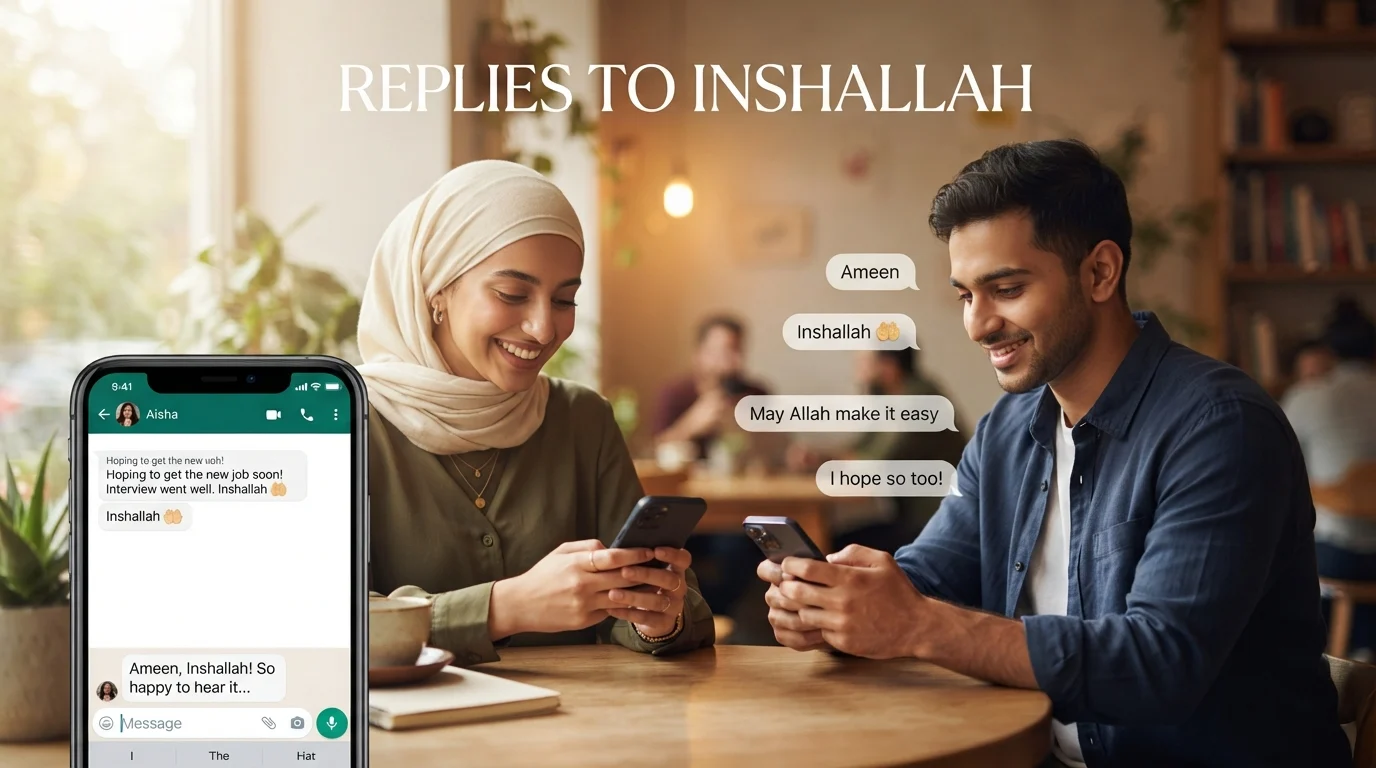
When someone says “Inshallah,” they are usually expressing hope that something will happen while acknowledging that its outcome is ultimately in God’s hands. The phrase comes from Arabic and is commonly understood as “if God wills.” You may hear it when someone talks about future plans, good news, prayers, goals, or something they genuinely hope will happen.
Knowing how to respond to “Inshallah” depends on the conversation and your relationship with the person. A respectful response can be simple, such as “Ameen,” while a friendly conversation may call for something warmer or more encouraging. Whether you are replying to a text, responding to a friend, or looking for a thoughtful answer, these replies to inshallah will help you keep the conversation natural and respectful.
1. “Ameen”
“Ameen” is one of the most natural responses when “Inshallah” is being used in connection with a hope, prayer, or good outcome.
Best for: Religious, sincere, or hopeful conversations.
Alternative: “Ameen, Inshallah.”
Examples:
- “Inshallah, everything works out.” — “Ameen.”
- “Inshallah, you get the opportunity.” — “Ameen, thank you.”
2. “Inshallah”
Sometimes simply returning the phrase is enough. It shows that you share the hope or intention.
Best for: Casual conversations with someone who commonly uses the phrase.
Alternative: “Yes, Inshallah.”
Examples:
- “We’ll meet again soon, Inshallah.” — “Inshallah!”
- “Hopefully everything goes well.” — “Inshallah.”
3. “Ameen, Inshallah”
This combines agreement, hope, and a prayerful sentiment.
Best for: Meaningful conversations about future plans or wishes.
Alternative: “Inshallah, may it happen.”
Examples:
- “Inshallah, you achieve your dream.” — “Ameen, Inshallah.”
- “We’ll have better days ahead, Inshallah.” — “Ameen, Inshallah.”
4. “May Allah Make It Happen”
This is a warm response when someone is hoping for something important.
Best for: Serious goals, prayers, and personal hopes.
Alternative: “May Allah make it easy for you.”
Examples:
- “I hope I finally get the job, Inshallah.” — “May Allah make it happen.”
- “We hope to move into our new home soon, Inshallah.” — “May Allah make it easy for you.”
5. “Ameen, May Allah Make It Easy”
This response combines encouragement with a prayer for ease.
Best for: Difficult situations or major life goals.
Alternative: “Ameen, may Allah make everything easy.”
Examples:
- “I’m hoping everything goes smoothly, Inshallah.” — “Ameen, may Allah make it easy.”
- “I have a big decision coming up, Inshallah.” — “Ameen, may Allah guide you and make it easy.”
6. “Hopefully!”
A simple English response works well when the conversation is informal.
Best for: Friendly, everyday conversations.
Alternative: “I hope so!”
Examples:
- “We’ll see each other soon, Inshallah.” — “Hopefully!”
- “Things will get better, Inshallah.” — “I really hope so.”
7. “Inshallah, It Will”
This is a positive and reassuring response.
Best for: Encouraging someone who is optimistic about the future.
Alternative: “Inshallah, it’ll work out.”
Examples:
- “I think everything will be okay, Inshallah.” — “Inshallah, it will.”
- “Hopefully I can accomplish this goal.” — “Inshallah, you will.”
8. “May Allah Bless You”
When someone shares a hopeful intention, responding with a blessing can add warmth to the conversation.
Best for: Kind and heartfelt exchanges.
Alternative: “Allah bless you.”
Examples:
- “I’m praying for a better year, Inshallah.” — “May Allah bless you.”
- “I hope I can help my family more, Inshallah.” — “May Allah bless your efforts.”
9. “That Would Be Wonderful”
Not every response needs to be religious. A warm acknowledgment can also be appropriate.
Best for: Friendly conversations where you want to show enthusiasm.
Alternative: “That would be amazing.”
Examples:
- “Hopefully we can travel together, Inshallah.” — “That would be wonderful.”
- “I hope we can celebrate together next year.” — “That would be amazing.”
10. “I Hope It Works Out”
This is a thoughtful and supportive response.
Best for: Friends, coworkers, and acquaintances discussing plans.
Alternative: “I’m hoping it works out too.”
Examples:
- “I’m applying for a new position, Inshallah.” — “I hope it works out for you.”
- “We’re hoping to move soon, Inshallah.” — “I really hope everything works out.”
11. “Ameen, I’m Praying for You”
This response shows personal support and genuine care.
Best for: Close friends or family members.
Alternative: “Ameen. I’ll keep you in my prayers.”
Examples:
- “Inshallah, I’ll get through this.” — “Ameen, I’m praying for you.”
- “I hope things improve soon, Inshallah.” — “Ameen, I’m keeping you in my prayers.”
12. “May Allah Grant Your Wish”
Use this when someone expresses a sincere hope or heartfelt desire.
Best for: Personal goals and meaningful wishes.
Alternative: “May Allah fulfill your hopes.”
Examples:
- “I hope this dream comes true, Inshallah.” — “May Allah grant your wish.”
- “I’m hoping for good news soon.” — “May Allah fulfill your hopes.”
13. “Inshallah, Khair”
“Khair” can refer to goodness, so this expression conveys hope that things will turn out well.
Best for: Uncertain situations or future outcomes.
Alternative: “Inshallah, it will be for the best.”
Examples:
- “I don’t know what will happen next, Inshallah.” — “Inshallah, khair.”
- “We’re waiting to hear the decision.” — “Inshallah, khair.”
14. “I’m Hoping for the Same”
This is a natural response when you share the other person’s hope.
Best for: Friends and casual conversations.
Alternative: “I hope so too.”
Examples:
- “Inshallah, we’ll get good news.” — “I’m hoping for the same.”
- “Hopefully everything goes according to plan.” — “I hope so too.”
15. “May Allah Guide You”
This response is especially appropriate when someone is discussing an important decision or uncertain path.
Best for: Personal decisions and serious conversations.
Alternative: “May Allah guide you to what is best.”
Examples:
- “I’m thinking carefully about my next step, Inshallah.” — “May Allah guide you.”
- “I hope I make the right decision.” — “May Allah guide you toward what is best.”
16. “Inshallah, Good Things Are Coming”
This adds optimism to a hopeful conversation.
Best for: Encouraging someone about the future.
Alternative: “Inshallah, better days are ahead.”
Examples:
- “I’m hoping life gets better soon.” — “Inshallah, good things are coming.”
- “I’m working toward a fresh start, Inshallah.” — “Inshallah, better days are ahead.”
17. “Ameen, May It Be Good for You”
This is a thoughtful way to express hope while focusing on what is beneficial.
Best for: Important personal wishes.
Alternative: “Ameen, may it be خير for you.”
Examples:
- “I really want this opportunity, Inshallah.” — “Ameen, may it be good for you.”
- “I hope this change works out.” — “Ameen, may it be خير for you.”
18. “I’m Happy for You”
Use this when “Inshallah” follows exciting news or a positive plan.
Best for: Celebrating someone’s hopes.
Alternative: “That’s wonderful news.”
Examples:
- “I’m starting a new chapter soon, Inshallah.” — “I’m happy for you!”
- “Hopefully I’ll reach my goal this year.” — “That’s wonderful. I’m happy for you.”
19. “You’ve Got This, Inshallah”
This combines encouragement with the phrase naturally.
Best for: Goals, exams, interviews, and challenges.
Alternative: “You can do it, Inshallah.”
Examples:
- “I have my exam tomorrow, Inshallah.” — “You’ve got this, Inshallah!”
- “I’m nervous about the interview.” — “You can do it, Inshallah.”
20. “May It Bring You Happiness”
This is a gentle response when someone is hoping for a positive change.
Best for: Relationships, new beginnings, and personal goals.
Alternative: “May Allah bring you happiness and peace.”
Examples:
- “I hope this new chapter goes well, Inshallah.” — “May it bring you happiness.”
- “I’m hoping for something beautiful ahead.” — “May Allah bless it with happiness.”
21. “Inshallah, We’ll See”
This response works when you want to remain hopeful without making a definite promise.
Best for: Uncertain plans.
Alternative: “Hopefully, we’ll see.”
Examples:
- “Maybe we’ll meet this weekend, Inshallah.” — “Inshallah, we’ll see.”
- “I might be able to come tomorrow.” — “Inshallah, we’ll see.”
22. “That’s the Hope”
This is short, natural, and conversational.
Best for: Casual discussions about future plans.
Alternative: “That’s what we’re hoping for.”
Examples:
- “Hopefully everything goes smoothly, Inshallah.” — “That’s the hope.”
- “We’ll have good news soon, Inshallah.” — “That’s what we’re hoping for.”
23. “May Allah Accept Your Dua”
When “Inshallah” appears alongside a prayer or personal supplication, this response can feel especially meaningful.
Best for: Dua, prayer, and spiritual conversations.
Alternative: “Ameen, may Allah accept your dua.”
Examples:
- “I’m making dua for my family, Inshallah.” — “May Allah accept your dua.”
- “I’m praying for a good outcome.” — “Ameen, may Allah accept your dua.”
24. “Ameen, Ya Rabb”
This is a heartfelt response to a prayer or sincere hope.
Best for: Spiritual and emotional conversations.
Alternative: “Ameen, O Lord.”
Examples:
- “Inshallah, everything gets better.” — “Ameen, Ya Rabb.”
- “May we receive good news soon.” — “Ameen, Ya Rabb.”
25. “I’ll Be Rooting for You”
This is a supportive English response that works especially well in casual conversations.
Best for: Friends, classmates, and coworkers.
Alternative: “I’m cheering you on.”
Examples:
- “I’m going for that promotion, Inshallah.” — “I’ll be rooting for you!”
- “I hope I pass this exam.” — “I’m cheering you on.”
26. “Inshallah, You’ll Get It”
Use this when someone is hoping to achieve a specific goal.
Best for: Jobs, exams, opportunities, and personal goals.
Alternative: “Inshallah, you’ll succeed.”
Examples:
- “I really want this job, Inshallah.” — “Inshallah, you’ll get it.”
- “I’ve worked so hard for this opportunity.” — “Inshallah, it pays off.”
27. “May Allah Give You What’s Best”
This response acknowledges that what is best may not always be exactly what someone initially hopes for.
Best for: Major life decisions or uncertain outcomes.
Alternative: “May Allah grant you what is best for you.”
Examples:
- “I hope this opportunity works out, Inshallah.” — “May Allah give you what’s best.”
- “I’m waiting to see what happens.” — “Inshallah, Allah gives you what is best.”
28. “Ameen, I Hope It Comes True”
This combines warmth with genuine enthusiasm.
Best for: Dreams, wishes, and exciting plans.
Alternative: “Ameen, may your wish come true.”
Examples:
- “I hope my dream finally happens, Inshallah.” — “Ameen, I hope it comes true.”
- “I’m really hoping for good news.” — “Ameen, may it come true.”
29. “Inshallah, Everything Will Be Alright”
This is comforting when someone is worried about the future.
Best for: Reassuring someone during uncertainty.
Alternative: “Inshallah, everything will work out.”
Examples:
- “I’m worried about what happens next.” — “Inshallah, everything will be alright.”
- “I hope things settle down soon.” — “Inshallah, everything will work out.”
30. “Ameen. Inshallah, What’s Meant for You Will Find You”
This is a warm and reflective response that emphasizes hope and trust.
Best for: Deep conversations about relationships, opportunities, and life changes.
Alternative: “Ameen. May what is best for you come your way.”
Examples:
- “I hope this opportunity is meant for me, Inshallah.” — “Ameen. What’s meant for you will find you.”
- “I’m leaving the outcome to Allah.” — “Ameen. May what is best come your way.”
How to Choose the Right Reply to “Inshallah”
The best response depends on context, relationship, and tone. If someone says “Inshallah” after mentioning a prayer, “Ameen” is usually a natural choice. If they are talking about an upcoming exam, interview, trip, or goal, you can respond with encouragement such as “You’ve got this, Inshallah.”
If the person is simply discussing future plans, you do not need a formal response. “Hopefully,” “Inshallah,” or “I hope so too” can keep the conversation relaxed and natural.
Is “Ameen” a Good Reply to “Inshallah”?
Yes, particularly when “Inshallah” expresses a sincere hope, prayer, or desired outcome. “Ameen” essentially expresses agreement with a prayer or hope.
For example:
- “Inshallah, everything works out.” — “Ameen.”
- “Inshallah, you achieve your dream.” — “Ameen, Inshallah.”
The exact wording can vary based on personal preference, cultural background, and the context of the conversation.
What Does “Inshallah” Mean?
“Inshallah” is an Arabic expression commonly translated as “if God wills” or “God willing.” It is often used when discussing future events, plans, hopes, or intentions.
For example, someone might say, “I’ll see you tomorrow, Inshallah,” meaning they intend or hope to see you tomorrow while recognizing that the future is ultimately in God’s hands.
Replies to Inshallah in Text Messages
Texting often calls for shorter answers. You do not need to write a long message when a simple response communicates your feelings.
Some natural text replies include:
- “Ameen 🤲”
- “Inshallah ❤️”
- “Ameen, Inshallah.”
- “Hopefully!”
- “Inshallah, you got this!”
- “May Allah make it easy.”
- “I hope so too.”
Common Mistakes When Replying to “Inshallah”
One common mistake is treating every use of “Inshallah” exactly the same. The phrase can be used in prayers, hopes, plans, casual conversation, and many other contexts.
Another mistake is overthinking your response. If the conversation is casual, a simple “Inshallah” or “Ameen” may be more natural than a lengthy answer. Most importantly, respond respectfully and consider the person’s tone.
FAQs
What is the best reply to “Inshallah”?
“Ameen” is one of the most common and natural responses when “Inshallah” expresses a hope or prayer. You can also say “Inshallah,” “May Allah make it happen,” or “I hope so too.”
Can I reply “Ameen” to “Inshallah”?
Yes. “Ameen” is especially appropriate when the person is expressing a prayer, sincere hope, or positive wish.
What should I reply to “Inshallah” in a text?
For casual texting, try “Ameen 🤲,” “Inshallah ❤️,” “Hopefully!”, or “Ameen, Inshallah.” Choose one that matches the tone of the conversation.
What does “Inshallah” mean?
“Inshallah” generally means “if God wills” or “God willing.” It is commonly used when discussing future events, plans, hopes, or intentions.
Is “Inshallah” a promise?
Not necessarily. Saying “Inshallah” can express an intention or hope for something to happen while acknowledging that the future is ultimately dependent on God’s will. Context matters.
Conclusion
The best replies to inshallah are respectful, natural, and appropriate for the situation. “Ameen” is a simple choice for prayers and sincere hopes, while “I hope so too,” “Hopefully,” or “You’ve got this, Inshallah” can work well in everyday conversations.
You do not need a complicated response to sound thoughtful. Pay attention to what the person means, match their tone, and choose words that feel genuine. Whether you’re replying to a friend, family member, coworker, or someone close to you, a warm and respectful response can make the conversation feel more meaningful.

I am Alex James, the Administrator of Replieds. I help create useful, thoughtful, and engaging reply ideas that make conversations easier, more natural, confident, and meaningful for everyone.